
Ever wondered why our clocks stubbornly stick to 60 seconds in a minute and 60 minutes in an hour? While most of our modern measurements, from currency to distance, revolve around the easy-to-grasp base-10 (decimal) system, time operates on a completely different logic. The surprising truth is that we can largely blame Babylon – or more accurately, the ingenious ancient civilizations of Mesopotamia, particularly the Sumerians and Babylonians, who developed a base-60 (sexagesimal) number system thousands of years ago. This ancient mathematical framework, born from practical needs in astronomy and trade, laid the foundation for the time divisions we still use in July 2026.
Last updated: July 22, 2026
Key Takeaways
- Our 60-second minute and 60-minute hour originate from the sexagesimal (base-60) number system developed by the ancient Sumerians and Babylonians over 4,000 years ago.
- The number 60 was highly prized for it’s exceptional divisibility, making it ideal for fractions and calculations in early astronomy and trade.
- This system was adopted and refined by ancient Greek astronomers like Claudius Ptolemy, who applied it to divide both celestial circles and the hour.
- Despite attempts to introduce decimal time, the base-60 system persisted due to its widespread adoption, mathematical utility, and the sheer inertia of established practices.
- Even today, this ancient Babylonian legacy underpins global timekeeping, including standards like Coordinated Universal Time (UTC).
The Ancient Roots of Our Clocks: Blaming Babylon and Sumer
The story of the 60-second minute and 60-minute hour doesn’t begin with atomic clocks or Swiss watchmakers. It starts around 4,000 to 5,000 years ago in Mesopotamia, the land between the Tigris and Euphrates rivers, home to the Sumerians and later the Babylonians. These civilizations were remarkably advanced for their time, developing writing, complex legal codes, and sophisticated mathematics.
Their unique contribution to timekeeping was the sexagesimal system, a number system based on the number 60. Unlike our familiar decimal (base-10) system, which uses ten distinct digits (0-9), the sexagesimal system uses 60 as its foundational unit. This choice wasn’t arbitrary; 60 holds significant mathematical advantages, particularly for a society heavily involved in trade and early astronomy.
Why Base-60 Was a Mathematical Marvel
The genius of base-60 lies in its divisibility. The number 60 can be evenly divided by 1, 2, 3, 4, 5, 6, 10, 12, 15, 20, and 30. This makes it incredibly flexible for working with fractions, which was essential for sharing goods, calculating land areas, and making precise astronomical observations. Imagine trying to divide a day into thirds or quarters using a base-100 system – it quickly gets messy.
For instance, half of 60 is 30, a third is 20, a quarter is 15, a fifth is 12, and a sixth is 10. These easy, whole-number divisions made calculations much simpler for ancient scribes and astronomers, who lacked modern calculators. This mathematical elegance ensured that fractions of a unit could be expressed without cumbersome decimals or recurring numbers.
precisely measure angles and positions in the sky. This is where base-60 truly shone.
They divided the circle into 360 degrees, a number itself derived from their understanding of the year (roughly 360 days) and perfectly divisible by 60. Each degree was then subdivided into 60 smaller units, which we know as minutes of arc, and each minute into 60 seconds of arc. This system provided the granularity needed for accurate astronomical charts and predictions.
From Degrees to Minutes: How Angles Shaped Time
The crucial leap from dividing celestial circles to dividing terrestrial time came with the Greeks. Hellenistic astronomers, particularly Claudius Ptolemy in the 2nd century CE, adopted the Babylonian sexagesimal system for their own astronomical work. Ptolemy’s monumental work, the Almagest, became the standard astronomical treatise for over a thousand years, effectively codifying these divisions.
Ptolemy extended the sexagesimal division of the degree to the division of the hour. Just as a degree was split into 60 minutes of arc and then 60 seconds of arc, he proposed dividing the hour into 60 partes minutae primae (first small parts), which became our “minutes,” and then into 60 partes minutae Secunda (second small parts), which became our “seconds.”
The Journey Through Empires and Eras: Rome, Arabia, and Europe
While the Greeks formalized the system, its journey to modern ubiquity was long and winding. Roman timekeeping, for instance, was often less precise, using twelve hours of daylight and twelve hours of night, which varied in length with the seasons. It was during the Islamic Golden Age, from the 8th to the 13th centuries, that the sexagesimal system truly flourished and was meticulously preserved.
Arabic scholars translated and built upon Greek and Babylonian texts, perfecting astronomical instruments and calculations. This knowledge, including the precise division of time, eventually flowed into medieval Europe. By the 14th century, with the advent of mechanical clocks, the need for standardized, precise timekeeping became paramount, and Ptolemy’s sexagesimal divisions were the natural choice, already deeply embedded in astronomical and mathematical traditions.
The Invention of the Mechanical Clock and the Minute Hand
Early mechanical clocks, appearing in Europe around the 13th and 14th centuries, initially only had hour hands. They marked time in hours, often striking bells. However, as precision engineering advanced and the demands of navigation and scientific observation grew, the need for smaller time units became apparent. By the late 16th and early 17th centuries, the minute hand became a common feature on clocks, followed by the second hand.
The integration of these hands solidified the 60-minute hour and 60-second minute into daily life. People could now visually track these subdivisions of time, reinforcing the ancient Babylonian system through tangible technology. This standardization was crucial for a rapidly globalizing world, enabling coordinated activities and precise scientific endeavors.
The Decimal Dilemma: Why We Never Switched
Given the dominance of the decimal system in almost every other measurement, it seems logical that someone would try to decimalize time. Indeed, during the French Revolution in October 1793, the newly established French Republic made a bold, albeit short-lived, attempt to do just that. They introduced a system where the day was divided into 10 hours, each hour into 100 minutes, and each minute into 100 seconds.
This “decimal time” was intended to align with the metric system and symbolize a complete break from old traditions. However, it proved incredibly unpopular and impractical. People were used to their traditional clocks, and the new system disrupted everything from work schedules to astronomical calculations. It was officially abandoned in 1795, a mere two years after its introduction. The entrenched nature of the sexagesimal system, its mathematical utility, and sheer human habit proved too powerful to overcome.
Practical Tips: Understanding Time in 2026
Even in 2026, with hyper-accurate atomic clocks and digital displays, the ancient Babylonian legacy endures. The 60-second minute and 60-minute hour are fundamental to Coordinated Universal Time (UTC), the global standard by which all other time zones are set. Understanding this historical context helps us appreciate the deep roots of our modern world.
Practically speaking, the divisibility of 60 continues to be useful. When splitting tasks, planning schedules, or even understanding musical rhythm, its numerous factors offer natural breakpoints. While we might not consciously think of Babylonian math every time we glance at our watch, its influence is undeniable. For a deeper dive into how these global standards work, explore GMT vs UTC: Unpacking the Global Time Difference in 2026 on GMT vs UTC.
Common Misconceptions About Time Divisions
One common misconception is that the 60-second minute is purely arbitrary. While the initial choice of base-60 might seem random to a decimal-minded individual, its mathematical properties, particularly its high number of divisors, made it incredibly practical for ancient calculations, especially those involving fractions and angles. It was a pragmatic choice, not a whimsical one.
Another idea is that modern technology should have replaced it by now. While decimal time was attempted, the immense global inertia of an established system, combined with the inherent divisibility benefits for certain applications like navigation and astronomy, means switching would be a monumental and costly undertaking with limited tangible benefits for everyday life. The system simply works too well to justify a radical change.
Expert Insights: The Enduring Power of Ancient Systems
Working with global time systems for years, I’ve observed how deeply ingrained these historical divisions are. The base-60 system, despite its ancient origins, remains remarkably solid. Its persistence is a testament not just to its mathematical utility but also to the power of established human convention. Once a system is universally adopted, the cost and disruption of changing it become immense, even if a theoretically “simpler” alternative exists.
From a different angle, the stability offered by this ancient system is a benefit. It provides a universal, unambiguous framework for synchronizing everything from satellite navigation to financial markets. The ‘second’ itself is now defined by atomic transitions, but its grouping into 60 still relies on the Babylonian blueprint, demonstrating a profound continuity in human ingenuity. According to Science.org, the mathematical elegance of 60 ensures its continued relevance.
Frequently Asked Questions
Why did the Babylonians choose base-60?
The Babylonians, building on Sumerian traditions, chose base-60 (sexagesimal) because the number 60 is highly divisible. It can be divided evenly by 1, 2, 3, 4, 5, 6, 10, 12, 15, 20, and 30, making it ideal for calculations involving fractions, which was crucial for their trade, land measurement, and sophisticated astronomical observations.
Are there any other systems that use base-60?
Beyond timekeeping, the sexagesimal system is still used in geometry for measuring angles. A circle is divided into 360 degrees, with each degree further subdivided into 60 minutes of arc and 60 seconds of arc. This directly reflects the ancient Babylonian and Greek astronomical practices.
Why didn’t the French decimal time system succeed?
The French decimal time system, introduced during the Revolution (1793-1795), failed primarily due to popular resistance and practical difficulties. People were deeply accustomed to existing time divisions, and the new system disrupted daily routines, established clock-making, and made converting existing astronomical data extremely cumbersome, leading to its swift abandonment.
Does the 60-second minute have any modern scientific benefits?
While the initial choice was practical for ancient math, the system’s widespread adoption and the mathematical elegance of 60s divisibility continue to offer stability. It provides a common, internationally understood framework for time, essential for complex modern systems like GPS, global communication networks, and the precise calculations required in celestial mechanics.
How was the Babylonian system transmitted to the modern world?
The Babylonian sexagesimal system was transmitted through ancient Greek astronomers, most notably Claudius Ptolemy, who documented it in his Almagest. Later, Arabic scholars preserved and further developed this knowledge during the Islamic Golden Age, eventually reintroducing it to Europe where it was integrated into mechanical clocks and standardized timekeeping.
Is it possible we could switch to decimal time in the future?
While technologically possible, a global switch to decimal time is highly improbable as of July 2026. The economic and social costs of such a transition – recalibrating every clock, computer system, and human habit worldwide – would be immense, with very few practical benefits to outweigh the disruption. The historical inertia and existing utility of base-60 are too strong.
What role did sundials play in early timekeeping?
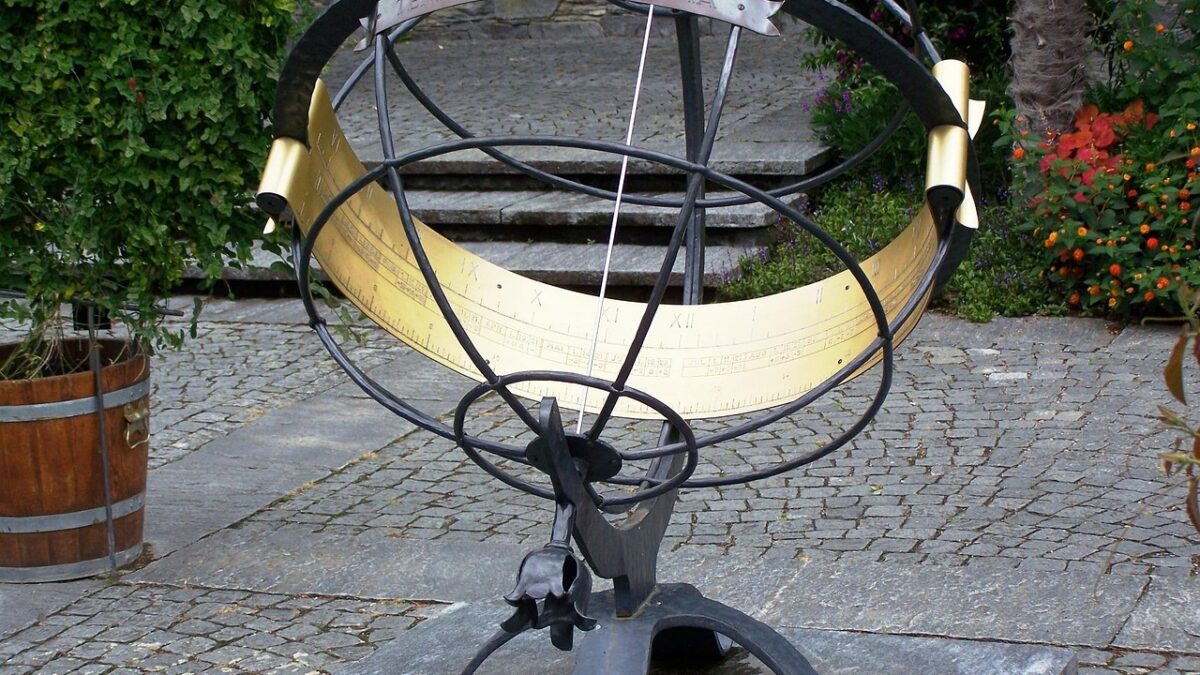
Sundials were crucial early timekeeping devices, using the sun’s shadow to mark the passage of time. While many divided daylight into 12 hours, the length of these “hours” varied with the seasons. The consistent, equal divisions of minutes and seconds came much later with the sexagesimal system and the development of more precise mechanical clocks.
Information current as of July 2026.