
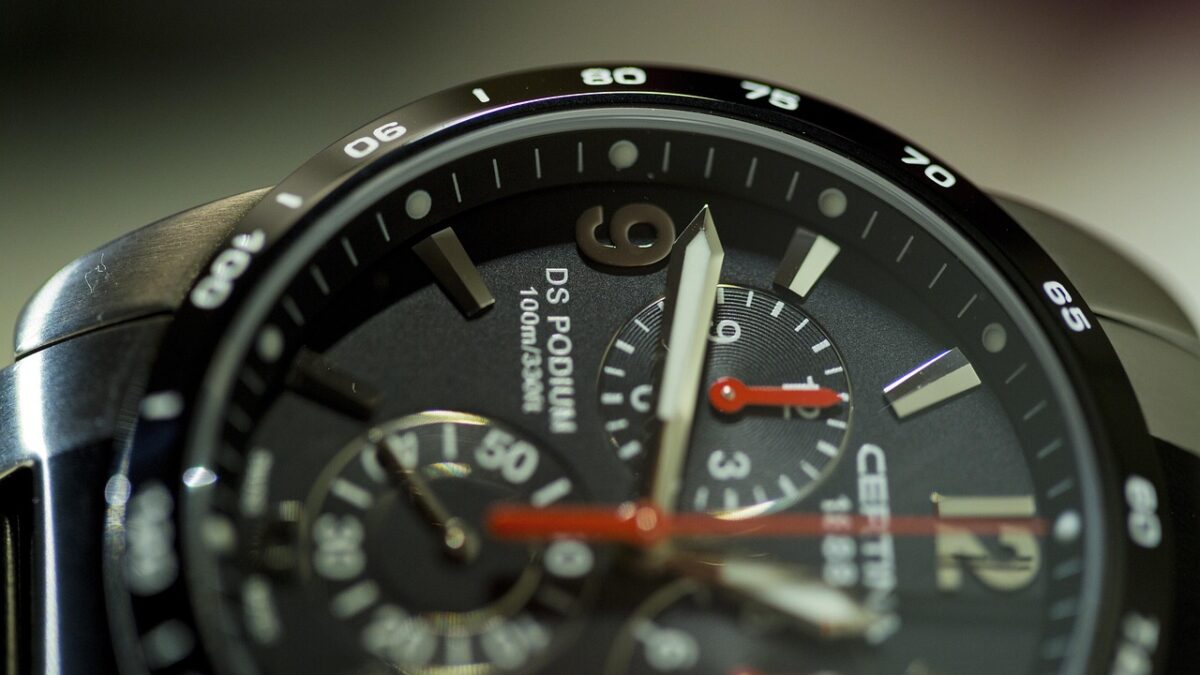
Sarah, a graphic designer, recently swapped her smart home display for a classic analog clock in her living room, surprised by how much calmer her space felt. It’s a common sentiment in 2026: while digital devices dominate our lives, the analog clock continues to captivate, offering a tangible connection to time that goes beyond mere digits.
Last updated: July 24, 2026
Key Takeaways
- Analog clocks provide unique aesthetic and cognitive benefits often overlooked in a digital age.
- Understanding the basic mechanics of clockwork enhances appreciation for these traditional timepieces.
- Proper placement and routine maintenance are crucial for the longevity and accuracy of an analog clock.
- Teaching children to read analog clocks fosters essential cognitive skills beyond simple time recognition.
- In 2026, analog clocks serve as both functional instruments and significant decorative elements, connecting us to historical timekeeping.
The Enduring Appeal of Analog Clocks in 2026
In a world saturated with digital screens, the analog clock stands out as a beacon of classic design and thoughtful functionality. Its enduring appeal in 2026 isn’t just about nostalgia; it’s about a deliberate choice for aesthetics, cognitive engagement, and a subtle resistance to constant digital notifications.
For many, the sweeping motion of a second hand or the elegant progression of minute and hour hands offers a more intuitive and visually pleasing representation of time’s passage. Practically speaking, glancing at a dial allows for a quick grasp of time remaining or elapsed, a spatial understanding that a row of numbers doesn’t always convey.
This aesthetic preference often extends to interior design, where a well-chosen analog clock becomes a focal point, complementing various styles from minimalist to rustic.
How Analog Clocks Work: A Glimpse Inside the Mechanism
At its core, an analog clock is a marvel of mechanical or electromechanical engineering designed to measure and display time. The fundamental principle involves a power source, a timekeeping element, and a display mechanism.
Most modern analog clocks rely on either a quartz movement or a mechanical movement. Quartz clocks use the precise vibrations of a small quartz crystal, powered by a battery, to regulate an integrated circuit that drives a small stepper motor. This motor then moves the gears connected to the hands.
Mechanical clocks, on the other hand, are intricate systems of gears, springs, and an escapement mechanism, often regulated by a pendulum or a balance wheel. The escapement is critical, converting the continuous force of the mainspring into precise, discrete movements that advance the clock’s hands at regular intervals. According to the National Association of Watch and Clock Collectors (NAWCC), the invention of the verge escapement around 1300 was a key moment in the development of accurate mechanical timekeeping.
A Brief History of Timekeeping Devices
The quest to measure time is as old as civilization itself. Early methods included sundials, which tracked the sun’s shadow, and water clocks (clepsydras), which measured time by the regulated flow of water. These ancient devices provided a foundational understanding of cyclical time.
The major leap came with the invention of the mechanical clock in Europe around the 13th century. These early clocks, often found in monastery towers, used complex gear trains and the groundbreaking escapement mechanism to keep time with oscillating elements like balance wheels or pendulums. This marked the birth of traditional timekeeping as we know it.
The precision of these timepieces steadily improved over centuries, driven by the needs of navigation and scientific observation, culminating in the highly accurate chronometers of the 18th century, which allowed for precise longitude determination at sea. For more on historical innovations, see the overview by Encyclopedia Britannica on time measurement.
Why Choose an Analog Clock Today?
Despite the prevalence of digital displays, analog clocks offer compelling benefits that extend beyond mere aesthetics. They foster a different relationship with time, encouraging a more complete understanding rather than just a numerical readout.
Firstly, for cognitive development, especially in children, learning to read an analog clock is a crucial step. It teaches fractions, angles, and concepts of ‘past’ and ‘to’ the hour, building spatial reasoning. Secondly, many find analog clocks less intrusive; they offer time at a glance without the constant glow or potential notifications of a digital device. This can contribute to a calmer, less distracted environment.
Finally, the sheer craftsmanship of a well-made mechanical clock, or the timeless design of a quartz analog clock, adds character and warmth to any space. It’s a functional piece of art, a subtle statement in a rapidly changing world.
Types of Analog Clocks and Their Applications
Analog clocks come in an impressive variety, each suited for different purposes and aesthetic preferences. Wall clocks are perhaps the most common, ranging from large, decorative pieces for living rooms to smaller, utilitarian ones for kitchens or offices.
Desk and mantle clocks offer more intimate time displays, often featuring intricate designs or chimes. Pendulum clocks, such as grandfather clocks, are iconic for their rhythmic swing and audible chimes, often becoming cherished family heirlooms. Alarm clocks, while increasingly digital, still have analog versions that provide a satisfyingly tactile experience when setting the wake-up time.
Specialized analog clocks include laboratory timers, railway station clocks designed for high visibility, and even sophisticated astronomical clocks that display celestial movements. The diversity ensures there’s an analog timepiece for virtually any need or taste.
Maintaining Your Analog Timepiece
Proper maintenance ensures the longevity and accuracy of your analog clock. For quartz movements, this primarily involves replacing the battery annually or bi-annually, as recommended by the manufacturer, to prevent leakage that can damage the mechanism. Clean the clock face and hands gently with a soft, dry cloth to avoid scratching.
Mechanical clocks, especially those with intricate clockwork, require more specialized care. They benefit from professional cleaning and oiling every few years, typically every 3 to 5 years, depending on the clock’s age and environment. This prevents wear on gears and pivots. Avoid direct sunlight or extreme temperature fluctuations, which can affect the oils and materials inside.
When moving a mechanical clock, especially a pendulum model, always secure the pendulum and weights to prevent damage. A common mistake is to adjust the time by moving the minute hand counter-clockwise on some older models; always check the manufacturer’s instructions. Incorrect winding or setting can lead to costly repairs.
Analog vs. Digital: Understanding the Key Differences
The choice between an analog and a digital clock often comes down to preference and specific application, as each offers distinct advantages. Digital clocks provide precise, unambiguous time in a numerical format, which is ideal for quick readings, especially in fast-paced environments like a data center or a factory floor.
Analog clocks, while requiring a moment more to interpret, offer a spatial representation of time. You can instantly see where you are in an hour, how much time has passed, or how much remains, which is excellent for time management tasks or understanding durations. The visual sweep of hands also gives a sense of continuous time flow, rather than discrete jumps.
From a different angle, digital clocks often come with more features—alarms, timers, temperature displays, and network connectivity as of 2026. Analog clocks, particularly traditional mechanical ones, prioritize the art of timekeeping itself, emphasizing craftsmanship and classic design over multi-functionality.
| Feature | Analog Clock | Digital Clock |
|---|---|---|
| Time Display | Hands on a dial (spatial) | Numerical digits (precise) |
| Aesthetics | Traditional, decorative, classic | Modern, functional, often minimalist |
| Cognitive Skill | Teaches time concepts, fractions | Instant recognition, no interpretation |
| Power Source | Mechanical (springs/weights) or Battery (quartz) | Battery or AC power |
| Complexity | Can be simple or highly intricate | Generally electronic circuits |
| Maintenance | Varies (battery change to professional servicing) | Battery change, firmware updates (smart clocks) |
Pros
- Enhances understanding of time’s passage visually.
- Adds aesthetic value and classic charm to decor.
- Excellent tool for teaching children to read time.
- Often perceived as less intrusive without bright lights or notifications.
- Mechanical versions offer a connection to historical craftsmanship.
Cons
- Requires interpretation; not as instantly precise as digital.
- Mechanical versions can require specialized maintenance.
- May be harder to read quickly in low light without illumination.
- Less feature-rich compared to many modern digital clocks.
- Pendulum or chiming clocks can be noisy for some environments.
Common Mistakes with Analog Clocks
One prevalent mistake is neglecting the environment where an analog clock is placed. Direct sunlight can fade dials and hands, and extreme humidity or temperature swings can affect the delicate mechanisms, especially in older or mechanical models. Positioning a clock near a heating vent or an exterior window can significantly impact its accuracy and lifespan.
Another error, particularly with battery-operated quartz clocks, is using cheap or incorrect battery types. Low-quality batteries can leak and corrode the movement, rendering the clock irreparable. Always use reputable brands and the size specified by the manufacturer.
For mechanical clocks, attempting complex repairs or adjustments without expert knowledge is a common pitfall. The intricate nature of gears and escapements means that a small misstep can cause significant damage. Trust certified horologists for servicing.
Tips for Maximizing Your Analog Clock Experience
To truly appreciate your analog clock, consider its role beyond just telling time. For optimal visual appeal and readability, ensure it’s placed against a contrasting background. A light-faced clock on a dark wall, or vice versa, will always stand out more effectively.
For rooms where sound is a factor, choose a clock with a silent sweep second hand, or opt for a mechanical clock with a pleasing, gentle tick if you enjoy that traditional sound. If you’re using an analog clock for educational purposes, select one with clear, large numerals and distinct hour and minute hands to aid learning.
When purchasing a new analog clock as of July 2026, research the movement type. Quartz movements are highly accurate and low maintenance, while mechanical movements offer a rich heritage and a tangible connection to the art of horology, albeit with higher maintenance requirements. Brands like Howard Miller and Rhythm Clocks offer a wide range of options, from modern minimalist to classic designs. For intricate repairs or valuations, consult the British Horological Institute for certified experts.
Frequently Asked Questions
Are analog clocks still accurate?
Yes, modern analog clocks, especially those with quartz movements, are highly accurate, often deviating by only a few seconds per month. High-end mechanical clocks can also maintain excellent accuracy when properly regulated and maintained.
How do I teach my child to read an analog clock?
Start by teaching them to identify the hour hand and minute hand, then focus on counting by fives for the minutes. Use a physical practice clock where they can move the hands, reinforcing the concepts of ‘past the hour’ and ‘to the hour’.
What is the difference between a mechanical and a quartz analog clock?
A mechanical analog clock uses springs, gears, and an escapement, often regulated by a pendulum, requiring winding. A quartz analog clock uses a battery-powered crystal oscillator to keep time, driving a small motor that moves the hands.
Can I put an analog clock in my bathroom?
It’s generally not recommended for mechanical clocks due to humidity. For quartz clocks, ensure it’s rated for bathroom use or has good water resistance to prevent moisture damage to the battery and internal components.
How often should a mechanical clock be serviced?
A good quality mechanical clock typically benefits from professional cleaning and oiling every 3 to 5 years. This routine maintenance helps prevent wear and tear, ensuring its accuracy and extending its lifespan.
Why does my analog clock sometimes stop working?
For quartz clocks, the most common reason is a dead battery. For mechanical clocks, it could be due to needing winding, debris in the movement, or needing professional servicing and lubrication.
Are vintage analog clocks worth restoring?
Many vintage analog clocks, especially those with unique designs or historical significance, are well worth restoring. Restoration can preserve their aesthetic and functional value, turning them into cherished heirlooms or valuable collectibles.
Conclusion
The analog clock, far from being an obsolete relic, thrives in 2026 as a testament to timeless design, intricate engineering, and a more deliberate way of engaging with time. Whether chosen for its aesthetic appeal, educational value, or the quiet charm of its rhythmic tick, an analog timepiece offers a unique blend of functionality and artistry. Embracing these traditional timekeepers allows us to appreciate the subtle beauty of time’s passage in an increasingly fast-paced world.
Information current as of July 2026; pricing and product details may change.
Related read: Random Date Generator: Beyond the Basics in 2026.
Related read: 6 PM EST to PST in 2026: Mastering Your Cross-Country Schedule.