
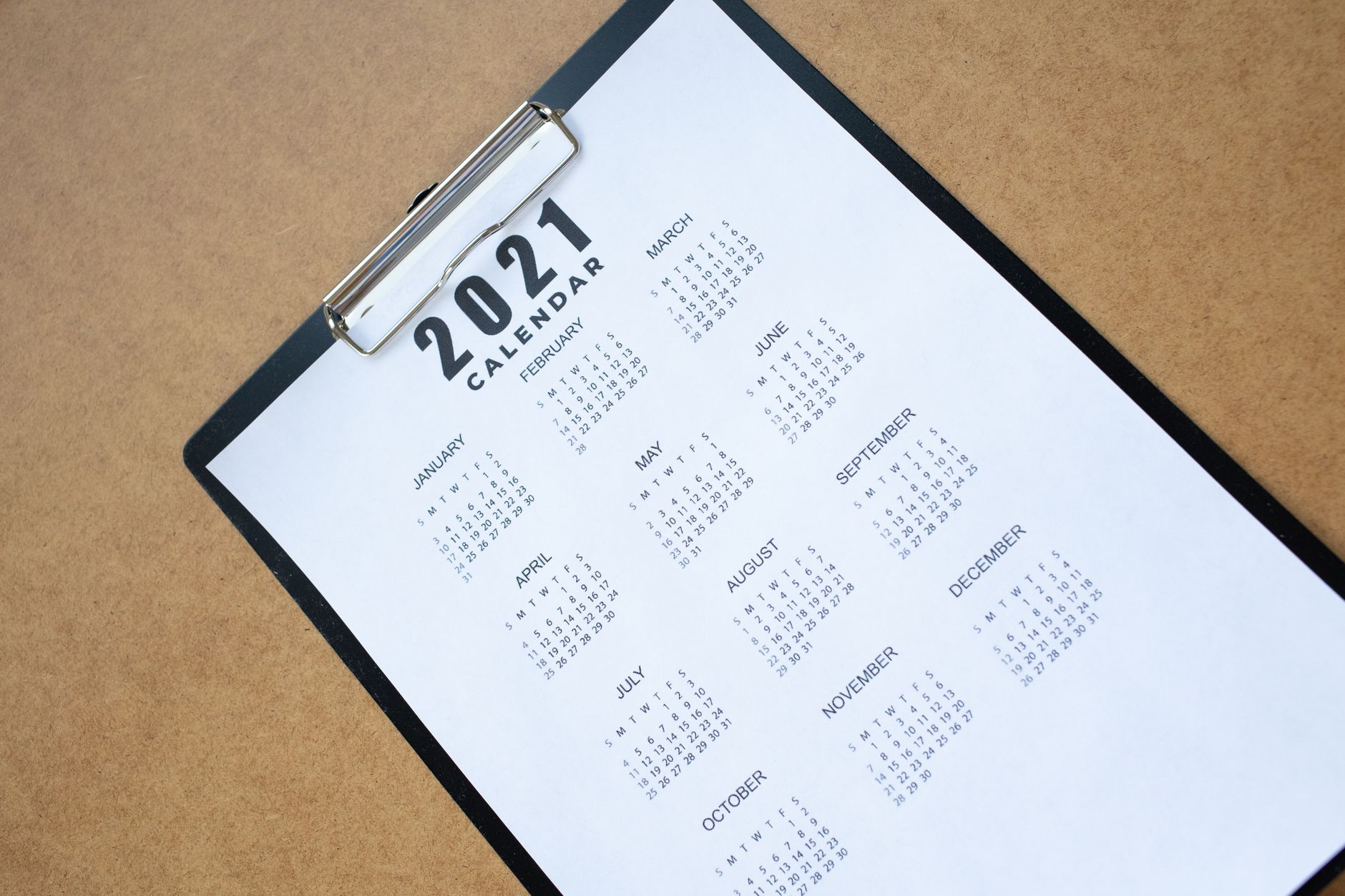
Every calendar faces the same inconvenient fraction — the solar year’s 365.2422 days, or the lunar month’s 29.53 — and each answers with its own repayment plan. The Gregorian plan is the famous 97 leap days per 400 years (every fourth year, minus centuries, plus every fourth century), accurate to about a day in three thousand years.
Last updated: July 22, 2026
The Islamic civil calendar owes a different debt. Its twelve lunar months average 354.367 days, so the tabular version used for planning inserts 11 leap days across a 30-year cycle — years such as 2, 5, 7, 10, 13 and so on run 355 days instead of 354, keeping the calendar aligned with the moon (not the sun; drifting through the seasons is the design, not the flaw). Religious practice adds the observational layer: months truly begin with the sighted crescent.
The Hebrew calendar repays in wholesale: rather than days, it intercalates an entire leap month — a second Adar — in 7 years of every 19, the Metonic cycle that reconciles moon-months with sun-years. The Hindu lunisolar calendars solve the same equation with the Adhik Maas, an extra month inserted whenever lunar arithmetic requires, which is why festival seasons hold steady while dates wander.
Persia’s Solar Hijri calendar takes the purist’s path: its new year, Nowruz, is pegged to the observed instant of the spring equinox at Tehran’s meridian — leap years fall wherever astronomy puts them, in a pattern more accurate than the Gregorian rule itself. The Ethiopian calendar, meanwhile, keeps the old Julian rhythm with charm: twelve 30-day months plus a tiny thirteenth month, Pagume, of five days — six in leap years — the origin of Ethiopia’s “thirteen months of sunshine” tourism slogan.
East Asia’s traditional calendar, governing Chinese New Year, embeds leap months by astronomical rule (a month without a solar term repeats), which is why the new year swings between late January and late February in a 19-year echo of the same Metonic beat.
Nine of these systems — leap days, leap months, and equinox-watchers alike — render today’s date side by side in the world calendars panel at ellatime.com, each one a different treaty signed with the same disorderly sky.
Comparing accuracy makes the design trade-offs vivid: the Julian calendar’s simple every-fourth-year rule drifts a day per 128 years — the error that forced the Gregorian surgery of 1582 — while the Gregorian’s 400-year pattern holds to a day in about 3,000 years, and Persia’s equinox-observation method beats them both by simply refusing to approximate. The Hebrew calculation, superb for the moon, carries its own slow solar drift of a day every couple of centuries.
The deeper lesson is that a calendar is a treaty between three clocks — sun, moon, and society — and every civilization signed different terms: Islam kept faith with the moon, Rome with the sun, Jerusalem and Beijing with both at the price of complexity. None is the “correct” calendar; each is a different answer to which sky matters most.
Seen together, the world’s leap rules are less rivalry than repertoire — humanity solving one astronomical fraction five different ways, each solution shaping when its billion keepers feast, fast, and begin again.
Related on Ellatime: Why Days Are Named After Planets and Gods · Why Does a Week Have Seven Days? · Why New Year Begins on January 1
Further reading: Encyclopaedia Britannica — Calendar
Editorial Note: This article was researched and written by the Ellatime editorial team. We fact-check our content and update it regularly. For questions or corrections, contact us.
Related read: How Many Weeks Are in a Year? (It's Not Exactly 52 in 2026).